
After nearly two decades in recruitment, I’ve witnessed the true cost of a hiring misstep. It’s not just a matter of a salary spent; it’s the erosion of team momentum, the drain on managerial time, and the quiet toll on morale. The right hire, conversely, is a catalyst for growth and cohesion. To help leaders consistently find that person, I developed the 5-C Interview Skills framework at PeopleLAKE. It’s a holistic method designed to move beyond the CV and understand the whole candidate, ensuring you select talent that contributes, fits, and endures.
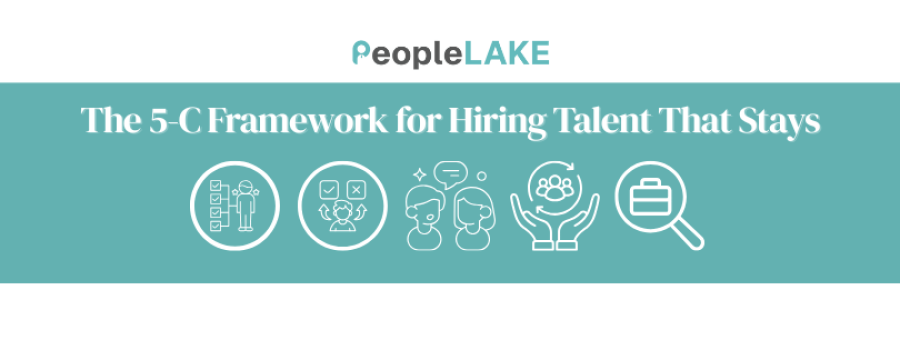
In today’s competitive landscape, scanning for keywords on a resume is a hopelessly incomplete strategy. True hiring savvy lies in a multidimensional assessment. The 5-C framework evaluates: Competency, Character, Communication, Cultural Fit, and Career Direction. Together, they form a complete picture, enabling smarter hires that reduce costly turnover and build stronger teams.
Here’s how to gauge each “C” during an interview, with targeted questions to uncover the truth.
1. Competency: The Foundation
This is the “can they do the job?” check, but it must go beyond a list of software names. Probe for depth, application, and problem-solving.
- How to Gauge: Listen for specific examples that detail their actions, the context, and the measurable impact. Do they explain the “why” behind their choices?
- Sample Questions:
- “Walk me through a project most comparable to what you’d do here. What was your specific role, the biggest obstacle, and the outcome?”
- “Tell me about a time you had to learn a new skill or technology to complete a task. How did you approach it?”
- “Describe a complex problem you solved. How did you diagnose the issue and decide on your solution?”
2. Character (Attitude): The Engine
Skills get someone in the door; character determines how they’ll navigate the journey. You’re looking for adaptability, resilience, and a growth mindset.
- How to Gauge: Assess their ownership of past situations, especially failures. Is their attitude blame-oriented or solution-focused? Do they exhibit curiosity and positivity?
- Sample Questions:
- “Tell me about a time you failed or made a significant mistake at work. What did you learn, and what did you do next?”
- “Describe a time you received difficult feedback. How did you process it, and what was the result?”
- “Give me an example of a time you had to adapt quickly to a sudden change in priorities or strategy.”
3. Communication Skills: The Connector
This is about clarity, collaboration, and the ability to listen as well as they speak. It’s critical for teamwork and execution.
- How to Gauge: Are their answers structured and concise? Do they ask clarifying questions? Observe how they explain complex topics.
- Sample Questions:
- “Explain a technical aspect of your previous role to me as if I were a non-expert client.”
- “Describe a situation where you had to persuade a colleague or manager to see things differently. How did you frame your argument?”
- “Tell me about a time a misunderstanding occurred on your team. How did you help resolve it?”
4. Cultural Fit: The Harmony
A brilliant candidate who clashes with your team’s rhythm will create discord. Fit is about shared values, work styles, and collective spirit.
- How to Gauge: Describe your company’s authentic culture (the good and the challenging). Do their eyes light up or glaze over? Do their preferences align with your environment?
- Sample Questions:
- “What type of work environment is ideal for you in your next job?”
- “Describe the management style that helps you thrive.”
- “Tell me about your ideal team dynamic. How do members support each other?”
5. Career Direction: The Anchor
A role must be a step on their path, not just *a* path. Alignment here is the strongest predictor of long-term retention.
- How to Gauge: Look for connections between the role’s responsibilities and their stated aspirations. Is this a strategic move for them, or just another job?
- Sample Questions:
- “Where do you hope this role fits into your longer-term career journey?”
- “What are you looking to achieve, learn, or develop in your next position that you couldn’t in your last?”
- “Imagine you’re still here in three years. What will have happened for you to feel it was a successful move?”
Implementing the 5-Cs
Don’t treat this as a rigid checklist. Weave questions from each area throughout a conversational interview. Have each interviewer focus on one or two “Cs” to gather diverse perspectives. Most importantly, listen not just for what is said, but for the patterns and consistency across all five dimensions.
Hiring is the most critical investment a leader makes. By moving beyond the resume to holistically assess Competency, Character, Communication, Cultural Fit, and Career Direction, you shift from filling a vacancy to securing a valuable, long-term partner for your team’s success. It’s a strategy that saves immeasurable time, protects your culture, and builds a foundation for sustained momentum.

 EN
EN  ZH
ZH